

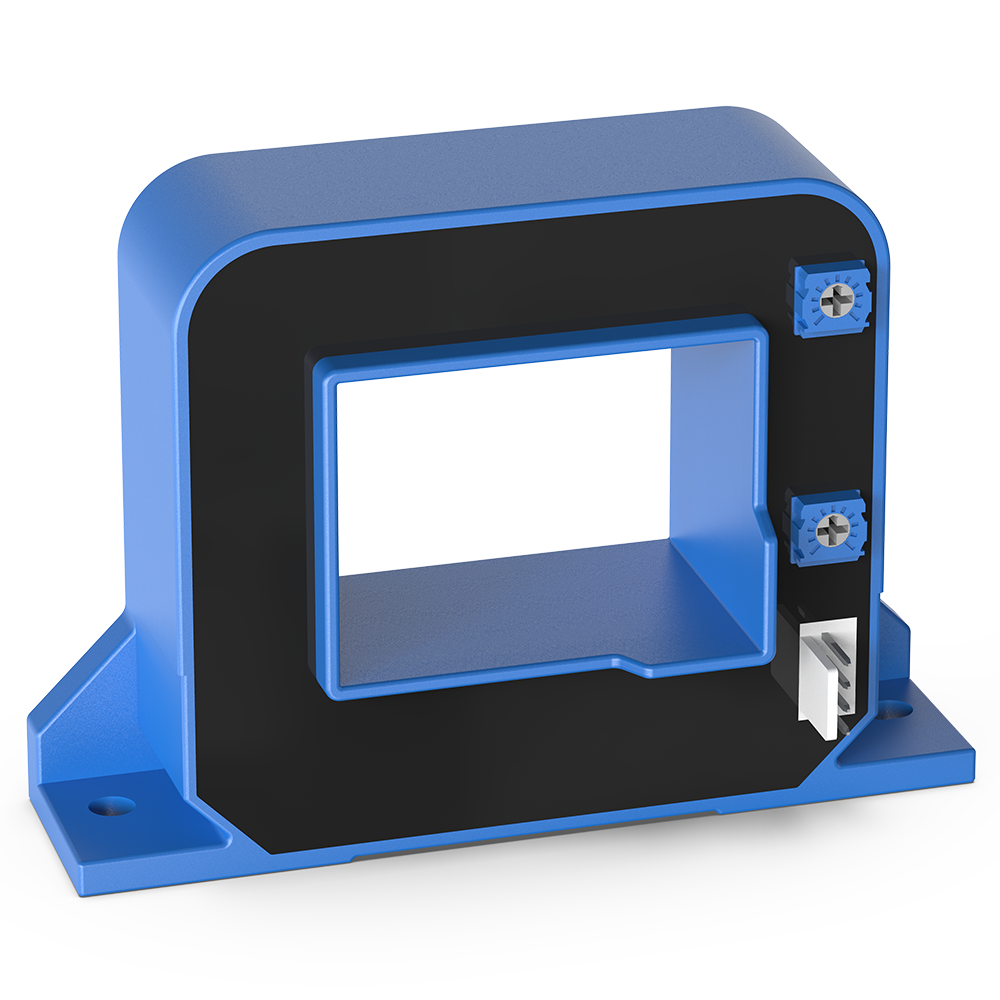
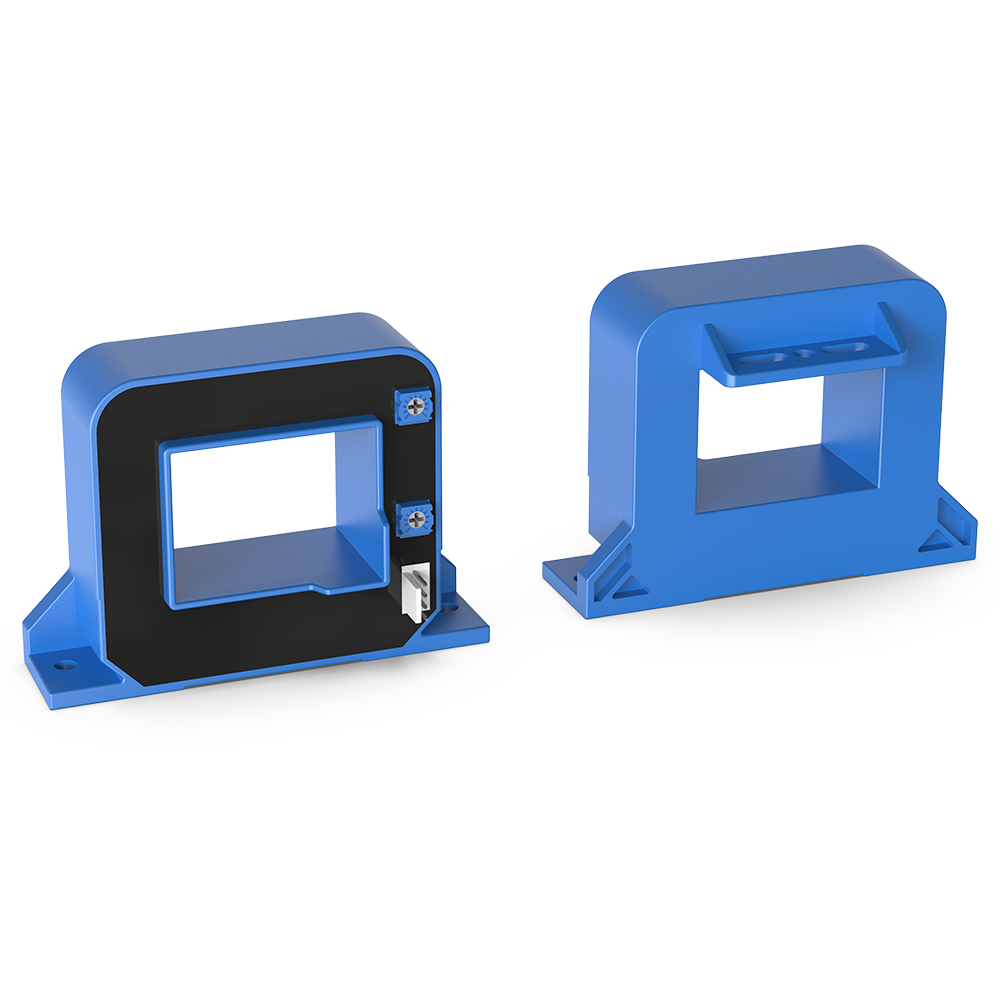
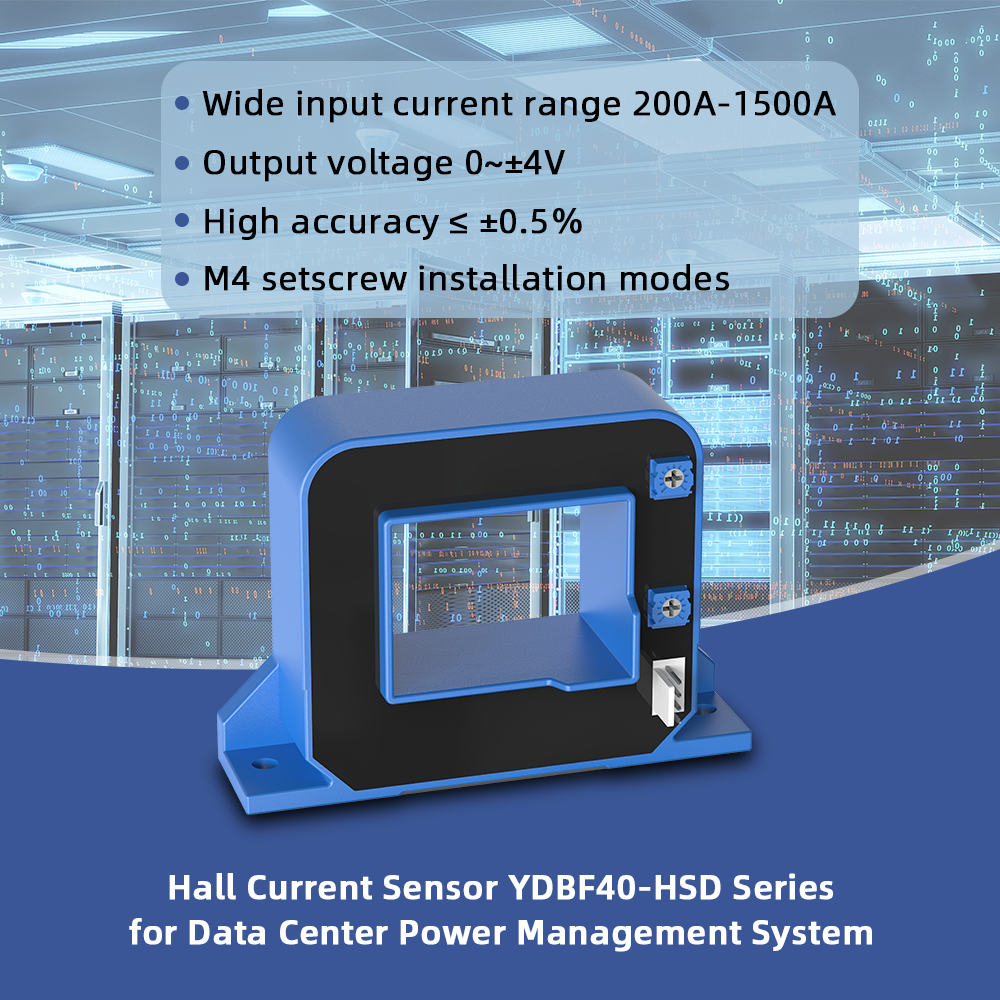
The YADA YDBF40‑HSD Series is a high‑precision Hall‑effect current sensor for demanding industrial applications. With a rated input current range from 200 A up to 1500 A, and an analog output of 0 to ±4 V, this device offers a non‑intrusive, galvanically isolated measurement solution ideal for inverters, UPS systems, power monitoring, energy management, and automated industrial control.
This sensor empowers OEMs, system integrators and power‑equipment manufacturers to implement high‑quality, real‑time current monitoring while maintaining system safety and reliability.
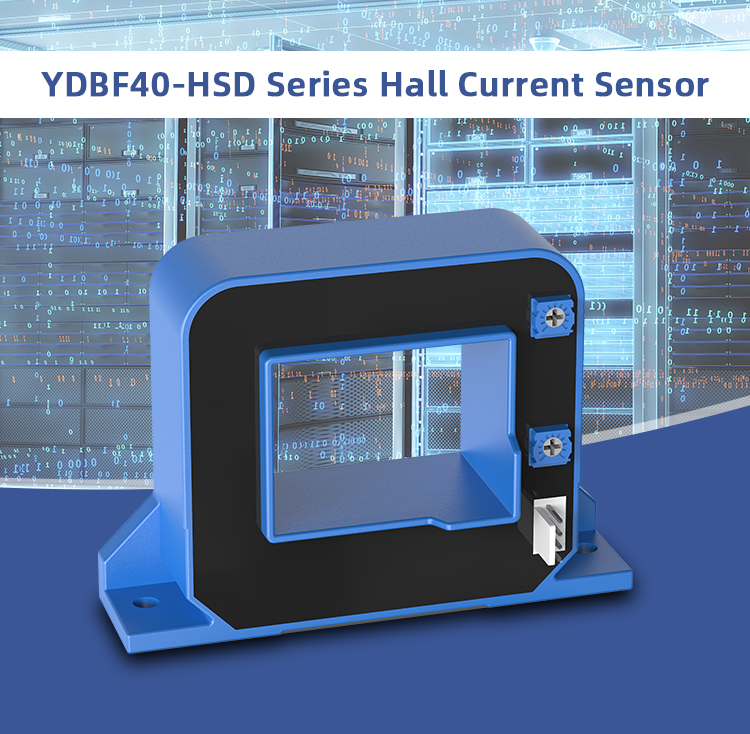
Technical Specifications
| Parameter | Value |
|---|---|
| Model Number | YDBF40‑HSD Series |
| Brand | YADA |
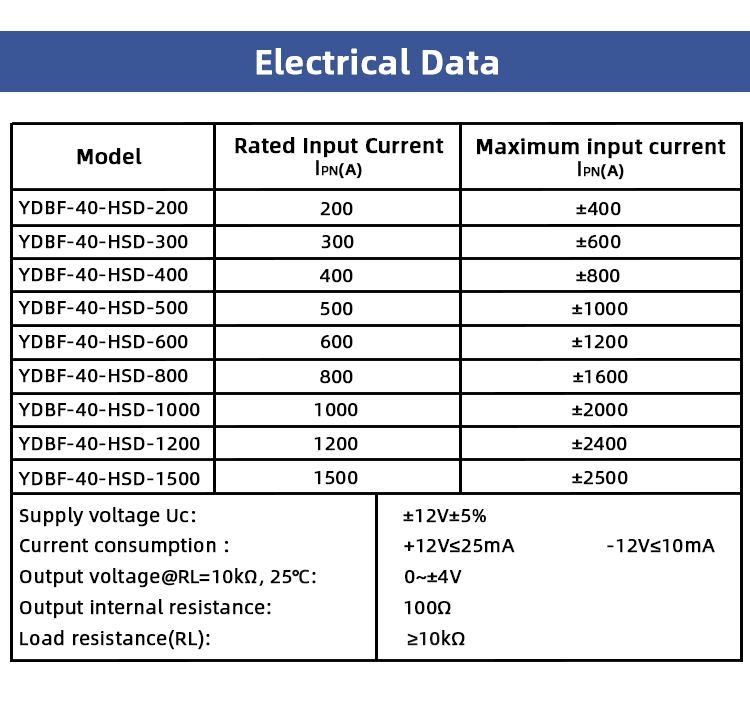
| Rated Input Current | 200 A up to 1500 A (customizable) |
| Output Voltage | 0 to ±4 V analog signal |
| Accuracy | ±0.5% |
| Supply Voltage | ±12 V (±5%) |
| Linearity | ±0.5% |
| Operating Temperature Range | ‑40 °C to +105 °C |
| Operating Humidity | 20%RH to 95%RH (no condensation) |
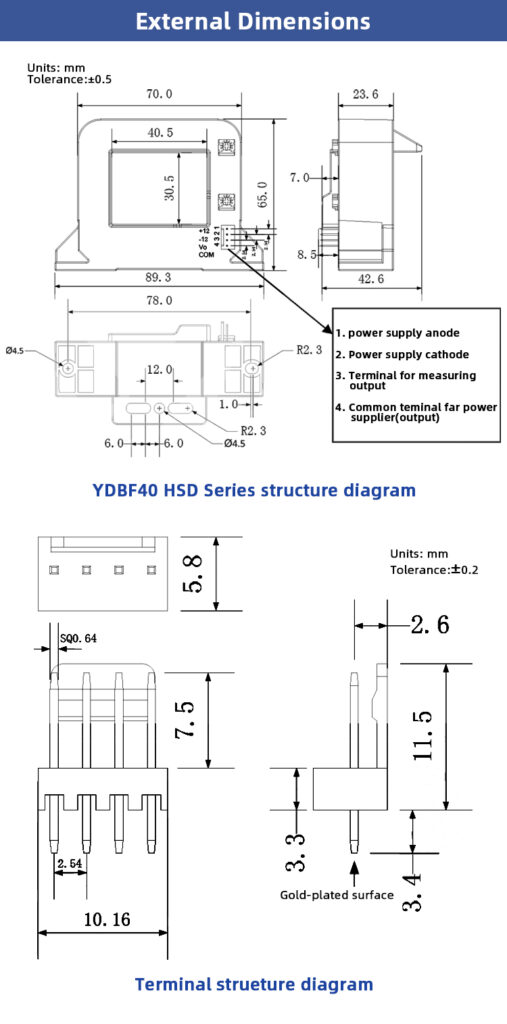
| Dimensions (L×W×H) | 89.3 ±0.5 mm × 42.6 ±0.5 mm × 65 ±0.5 mm |
| Weight | Approx. 242 g |
| Isolation / Withstand Voltage | AC 5 kV/min, 1 mA |
| Standard | JB/T 7490‑2007 |
| Material | PC/ABS |
| Warranty | 2 Years |
Features & Benefits
-
High Accuracy ±0.5%: Delivers high‑fidelity measurement, enabling accurate power consumption, fault detection and load balancing.
-
Wide Input Range (200A to 1500A): Covers large current‑measuring needs in heavy‑duty inverters, UPS, renewable‑energy systems, and industrial power supplies.
-
0 to ±4 V Output Signal: Compatible with most data acquisition systems, PLCs, energy monitoring modules and control systems.
-
Galvanic Isolation: Hall‑effect design ensures the sensor is electrically isolated from the high‑current conductor, increasing system safety and offering non‑intrusive measurement.
-
Industrial‑Grade Durability: Designed for harsh environments with wide operating temperature and humidity ranges, rugged plastic housing (PC/ABS) and high withstand voltage (AC 5 kV/min)
-
Customization Options: Input / output ranges can be tailored per customer specifications (MOQ may apply)
Application Scenarios
The YDBF40‑HSD series is well suited for a range of industrial and commercial power measurement and monitoring applications, including but not limited to:
-
Inverter systems (solar PV inverters, wind‑turbine inverters)
-
Uninterruptible power supplies (UPS) for data‑centres and telecom equipment
-
Battery energy storage systems (BESS) and hybrid energy systems
-
High‑current distribution and switchgear panels
-
Motor drives, industrial automation/robots and factory power‑monitoring
-
Smart grid, microgrid and energy‑management systems (EMS)
According to market analysis, the hall‑effect current sensor market is experiencing strong growth in industrial and energy‑monitoring sectors—as power systems become smarter, non‑intrusive, real‑time sensing gains increasing importance.
Why Choose YADA YDBF40‑HSD?
-
Cost‑effective and scalable: The model supports a broad range of current ratings, reducing the need to source multiple sensor types.
-
Non‑intrusive integration: The sensor can be installed without breaking the primary current path, minimizing system downtime and risk.
-
Reliable performance in harsh conditions: Designed for industrial environments, supporting wide temperature/humidity and high isolation.
-
Vendor support for customization: Custom input/output ranges and tailoring options help OEMs meet unique system needs.
-
Future‑proof for smart energy trends: With growing demand for current monitoring in EV charging stations, renewable energy, and large‑scale UPS, this sensor aligns with next‑generation power‑system requirements.